Today’s word of the day is celadon. It’s this color of green and this type of glazed pottery:
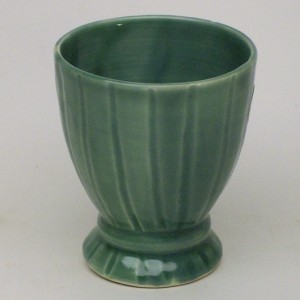
Photo by Bridgman Pottery and used under a Creative Commons license.
Today’s word of the day is celadon. It’s this color of green and this type of glazed pottery:
Today’s word of the day is corker, a remarkable or astounding person or thing.
The history of corker is really about bottle corks and not about Irish from Cork. It means a settler, as in a thing which settles (a debate, wager, etc.), not a person who newly inhabits a mostly unpopulated area.
A corker is the last word on a topic. It is literally a “stopper” like a bottle stopper, only in this case it is a debate stopper. It is something so great that any talk further about it, or any attempt to identify a better example of such a thing, is pointless. A similar use is when people say “Put a cork in it!” meaning “stop talking!”
You can find an apt description of a slightly different way of using of “corker” in this dictionary of Sussex dialect from 1840: “I have given him a corker; ‘I have silenced him;’ I have closed up his mouth as effectually as a cork does a bottle.”
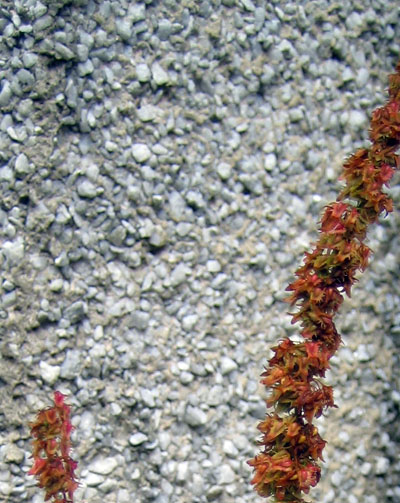
Today’s word of the day is harl, which generally means to drag something along the ground, but it can also mean to troll for fish, a rough mixture of lime and gravel (used on walls of houses, for example), and a type of fiber made of flax and hemp. Most uses of the word are most common in Scots English. Here’s what a harled wall looks like:
Today’s word of the day is kerplunk, a sound like something heavy falling in water. Splash!
At its root is plunk, added to which is the ker- prefix, which H.L. Mencken suggests, and others seem to confirm, is related to the German prefix ge-. It is used to form past participles in that language.
The Century Dictionary explains that ker- is “an unstressed introductory syllable, perhaps better written ka- or ke-, used in some dialectal words, without meaning in itself but serving to introduce an emphatic stress, as in kerslap, kerchunk, kerplunk, kerwhack, etc. It probably originated in the involuntary utterance which often precedes a sudden physical effort, as in striking with an ax or hammer or paving-rammer.”
Other ker- words are kerwallop, kerslop, kerflop, kerthump, kerslam, kerflummux, and kerbang. Kaboom and kablooey are probably also related.
In a tradition of uncovering unkind words for people, today’s word of the day is mooncalf, meaning a fool or a freak. It formerly was a name for an unformed embryo, said to have been created by the influence of the moon. You can find it in Shakespeare’s The Tempest, an English reader for schoolchildren, and Robert Nares’ 1822 dictionary. They’re also mentioned in H.G. Wells’ The First Men in the Moon as actual cattle-like creatures.
Today’s word of the day, amort, means lifeless, spiritless, or depressed but you need to read Keats to get the full effect. Of John Keats’s use of amort, Harry Buxton Forman wrote, “The use of the old word amort is peculiarly happy: it is more expressive of deadened perception than any other single word, and is full of poetic associations.”
She danc’d along with vague, regardless eyes,
Anxious her lips, her breathing quick and short:
The hallow’d hour was near at hand: she sighs
Amid the timbrels, and the throng’d resort
Of whisperers in anger, or in sport;
’Mid looks of love, defiance, hate and scorn,
Hoodwink’d with faery fancy; all amort,
Save to St. Agnes and her lambs unshorn,
And all the bliss to be before to-morrow morn.
—Part XIII of “Eve of St. Agnes” by John Keats
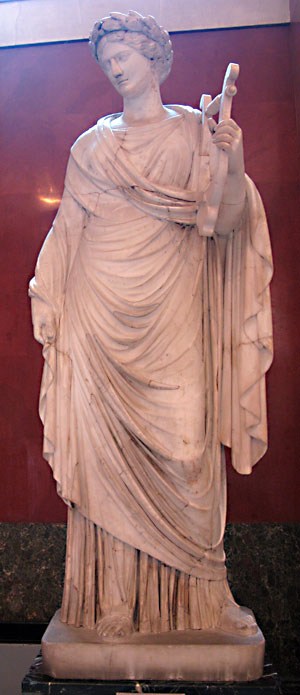
Today’s word of the day is terpsichorean. It means “relating to dancing” or “a dancer.” It comes from the name of Terpsichore, the Greek and Roman Muse of lyrical poetry, choral singing, and dancing.