Serendipi-tag

“It used to be my little secret, my secret that is until I found out that many of the writers I know practice the same habit. We love to read the dictionary. Many times I have pulled out the dictionary to look up the spelling of a particular word and then another word on the page catches my eye. Twenty minutes later I am still engrossed in the dictionary, browsing through the less familiar definitions.” —Creating Copy by William Ackerly

vacuum tube schematicIt’s true for more than just advertising copywriters: people love the serendipity of a dictionary. They like to get lost for a while, to be distracted, to learn something new.

We like to do that, too, so we’ve made many ways to explore Wordnik.

For example, you can explore another user’s lists. You can look at the related items for a word. You can check out zeitgeist and see what other words people are visiting right now.

But for my money, tags are the feature that offers the most subtle pathways to the unexpected. You can find tags on the right-hand side of a word’s main page.

There’s nothing particularly Linnaean about tags. They’re not meant to be universal. No governing body is going to insist on a hierarchy, a structure, or a form. Unlike Wordnik lists, which can have a mission statement (such as “words I found while reading Great Expectations by Charles Dickens“), tags’ intentions are usually silent.

Tags are personal. They are a way of classifying a word in a way that suits you. Beyond “don’t be a knucklehead,” there aren’t really any rules. You can use short tags, long tags, tags in other languages. You can tag a lot or a little. You can let that basic human need to sort and organize take over. Tag like a maniac in any way that is useful to you or the world.

In lieu of rules, I offer two tag guidelines that have been helpful to me:

1. Make your tags true as far as you know.
2. Make your tags memorable to you.

That way, you’ll have left clues for yourself (if you forget the word) and for other serendipiters who come across the same word. (See, I used a new word there and then tagged it with “neologism.”)

Tags are so personal that often the only obvious intention behind a tag is to demonstrate a connection between two words. For example, if someone tags the word basilect with language, then there’s a pretty good chance that basilect has something to do with language. That’s about as much as we can glean.

However, if someone tags the word language with cvccvvcv, most people are going to be mystified. It doesn’t even look like a word! But there was indeed a connection there for somebody, and, it turns out, the tags are useful if you need to know something about the orthography of a set of words. (Hint: each “c” stands for “consonant” and each “v” stands for “vowel.” Full explanation here.)

Remember that a word can both be tagged and can be a tag itself. At the top of every word’s tag page you’ll see “words tagged” with the word you’re looking at and at the bottom you’ll see “the word has been tagged.” Check out the tag page for neologism to see what I mean.

If you want a bit of guided serendipity, you can browse the tags made by any user who has a public profile. Here are some of mine.

If you’re looking for a little more about tagging from an insider’s point of view, I recommend the book Tagging: People-powered Metadata for the Social Web.

Happy tagging!

Photo by Paula Rey. Used under a Creative Commons license.
The Audio Cyclopedia

vacuum tube schematicI used to work at the Woods Hole Institute of Oceanography, in a basement office within sight of where Alvin was built. The basement held another, less-heralded marvel: the free table. Whenever a lab was overhauled or a grad student moved on, they’d cull their detritus and dump it on the free table. Part of the pinko ethos that infects academia, no doubt, but a wonderful thing.

Usual fare ran toward outdated WordPerfect manuals, but you would sometimes find a collection of neatly piled Pyrex labware with a note saying “slightly contaminated.” Or a broken oscilloscope. Or five cartons of Hollerith cards. Pretty great to a technostalgic pack rat.

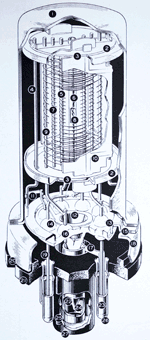
I especially loved finding specialized reference books. They’re usually de facto dictionaries, but the words are in situ, being put to good use as they’re being defined. One of my favorite free table gimmes was just such a book: The Audio Cyclopedia*, by Howard M. Tremaine. Probably bought in the seventies by someone working on sonar or recording whale songs, it’s a 1,700 page compendium of recording technology, in excruciating detail and with a weird Jeopardy! pose-everything-as-a-question prose style.

It is an absolutely tremendous source of of technicalese and audio industry terms of art, so yesterday I finally started a list I’ve been meaning to get to for a long time: Audio Argot, inspired by the Audio Cyclopedia. Please contribute, it’s an open list. Anything audio related fits the bill, I think—words needn’t come specifically from the Cyclopedia, but for those that do I’ll add a citation. Here’s the list.

* It seems to still be in demand. My scavenged copy is the 2nd edition, first published in 1969; the first edition was published in 1959 and it is not cheap.

A random walk through Wordnik

Quick note: we’re moving the word-of-the-day and the list-of-the-day off the Wordnik blog. Soon they’ll be available via email (visit your profile page to sign up), but for now you can find them (and us!) on Facebook and Twitter. The word-of-the-day also has its own page.


Sometimes I am asked “How am I supposed to use Wordnik?” and I’m not sure what to answer. “However you want,” seems a little too passive, and “to find out how words work” seems too obvious. So I thought I’d write up a recent walk I took through Wordnik.

I started with Random Word, because, hey, who doesn’t like random? The first word I got was run-a-ball, which is some kind of cricket term. I know nothing about the game of cricket (and in fact have gone on record to speculate that cricket may be an elaborate hoax). I tagged it “cricket” anyway, despite my lack of knowledge of the game, because the sentences were pretty clear (and I can check it with Kumanan and Krishna, our resident Wordnik cricket aficionados, on Monday). After I tag something, I usually check to see what else has been tagged with the same tag, but again, I’m not that interested in cricket, so I decide to look at the cricket entry, instead.

The entry for cricket is pretty good (and the pictures are nicely divided between the bug and the game, and somebody’s adorable kitten and his toy cricket — the rule of Flickr images, given any fairly common word, you will find at least one picture of a cat at that word).

It’s in the related words that I had my first “ah-ha!” moment — one of the synonyms given for “cricket” is “stool.” Huh? I clicked through to the full Century Dictionary definitions set, and I’ll be damned, there it is:

A small, low stool; a footstool. A barrister is described [Autobiography of Roger North, p. 92] as “putting cases and mooting with the students that sat on and before the crickets.” This was circa 1680. N. and Q., 7th ser., IV. 224.

(“N. and Q.” is “Notes and Queries” and that quote is from an 1887 issue.) Then I got curious as to who Roger North was, and found out that he looks like this, and that his letters

give us a delightful picture of the private life of a man of high birth, great abilities, and extraordinary accomplishments, who, after a successful career at the Bar, retired in the prime of life to his country house, and devoted himself to improving his property and exercising an enlightening and elevating influence upon his tenantry and neighbours, while he continued to take a lively interest in all that was going on outside the immediate range of his daily occupations.

(I put his book on my “read someday” list, which list, at the rate it is growing, requires me to live to be 137 years old.)

Going back to Wordnik, I wondered (not being a connoisseur of stools) how many other stools there might be that I knew nothing about, so I clicked through to the main entry for stool and scrolled down to its related words — to find, among others, cutty-stool, whose second definition is:

A seat in old Scottish churches in which acknowledged female offenders against chastity were placed during three Sundays, and publicly rebuked by their minister.

And on that same page there was a Twitter account I didn’t know about — someone else besides DrSamuelJOHNSON is tweeting in the style of Samuel Johnson (if Samuel Johnson were a) alive and b) not inclined to think Twitter a snare and a diversion), 1755Dictionary. Interesting!

So that’s one way to use Wordnik — certainly not the only way, or the most efficient way! — but a fun one.

If you have taken a particularly interesting walk through Wordnik lately, feel free to tell us about it in the comments!

Word of the day: barratry

Today’s word of the day is barratry, which is, among other meanings, the offense of persistently instigating lawsuits, typically groundless ones. Someone who commits barratry is a barrator, a “a common mover and maintainer of suits and controversies.”

“He is such a litigious fellow, though; so persistent with it; barratry, champerty, mad incorrigibility: he’s the wildest man of genius alive.” (From The Entailed Hat Or, Patty Cannon’s Times.)