Best of Word Soup 2013

Welcome to the second annual Word Soup Awards!

We at Wordnik not only watch TV, we listen for interesting, hilarious, ridiculous, and sometimes NSFW words and round them up right here. Now it’s time to the recognize the best of the best.

Best Use of a Favorite Word

The Mindy Project, defenestrate

We liked this show from the start. It’s funny, clever, and the actors are great. Then star and creator Mindy Kaling broke out with one of our favorite words to describe someone being ejected out a window, and our like turned to love.

Best Made-Up Collective Noun We Should All Begin Using Immediately

embarrassment of boobies, Bob’s Burgers

Of course there shouldn’t be anything embarrassing about boobies — unless you’re a 12-year old boy — but is it worse than a drunkship of cobblers? How about a bloat of hippopotami? A superfluity of nuns? Check out this list from Oxford Dictionaries for even more crazy collective nouns.

Best Old-Timey Word That Should Be Brought Back into English

pixilated, Boardwalk Empire

The Steve Buscemi vehicle set in 1920s Atlantic City has plenty of wonderful old-timey slangbunco artist, Mickey Finn, and zozzled are just a few — but our favorite this season was pixilated.

Pixilated, meaning eccentric, whimsical, or intoxicated, shouldn’t be confused with pixelated, which refers to images with pixels large enough to be seen. Pixilated may come from a blend of pixie and the suffix –lated.

Best Star Trek Reference

The Colbert Report, Gorn

Back in March, Barack Obama dared to confuse Jedi mind trick and Vulcan mind meld. Stephen Colbert had one thing to say to the president: “You are such a Gorn.” A Gorn, in case you didn’t know, is a humanoid reptile from the Star Trek universe.

Most Ridiculous Portmanteau

cliffpocalypsemageddonacaust, The Daily Show

Last year’s winner, 30 Rock’s unwindulax, is a tough act to follow, but Jon Stewart piled on the ridiculousness and the word-parts and ended up with cliffpocalypsemageddonacaust, a blend of fiscal cliff, apocalypse, armageddon, and holocaust.

Runner-up: crotcherazzi, The Mindy Project. Crotcherazzi is a blend of crotch and paparazzi, and refers to photographers who capture, whether by design or mistake, crotch shots of female celebrities who inadvertently flash whomever might be watching.

Most Ridiculous Portmanteau-Eponym

Changnesia, Community

Community kills it with eponyms (that is, words derived from names of people). Their term, Ferris Buellerian, won last year’s prize for Best Eponym, while Britta as a verb meaning to “make a small mistake” has entered the lexicon.

This year they outdid themselves with the ridiculous portmanteau eponym, Changnesia, a blend of the surname Chang and amnesia. Changnesia is “the complete loss of memory caused by sudden trauma that was, itself, also forgotten.” It’s also known as “Kevin’s Disease.”

Best Use of Portmanteaus

Veep

The Daily Show and Colbert Report tied last year, but this year there’s one clear winner.

Veep won us over with blends like co-POTAL, relating to a shared presidency; gestictionary, a dictionary of coded gestures; and the anxiet, weight loss due to anxiety. We can’t wait to see what else they come up with when Selina tries to go full-POTAL next season.

The We’re Ashamed to Admit We Get Our Education from TV Award – TIE

The Daily Show and The Colbert Report

Of course we keep up with the news, but sometimes it’s nice to have someone explain certain terms and put them into historical context. And that’s what just what Jon Stewart and Stephen Colbert do on The Daily Show and The Colbert Report.

We learned about the Southern strategy, a Republican party tactic to get votes in the South by “appealing to racism against against African Americans”; border surge, an increase of security along the U.S-Mexican border; narcoterrorism, “terrorism carried out to prevent interference with or divert attention from illegal narcotics trafficking; and many more.

Best Show About a Serial Killer That Also Has Interesting Words

Hannibal

Hannibal, a sort of prequel to Silence of the Lambs, was one of the most fascinating shows of the year. Not only did it sucker us into sympathizing with a serial killer, it gave us some interesting words, from the psychological (folie à deux), to the gruesome (blood eagle, Colombian necktie), to the random (tyromancy).

We’re looking forward to the next course.

Best Québécois-ism

l’affaire est ketchup, Parts Unknown

Leave it to chef, traveler, and writer Anthony Bourdain to introduce us to this Québécois idiom that roughly translates as “everything’s cool.” It’s almost enough to forgive Quebec for pastagate (almost).

The We’re So Glad We Finally Know the Difference Award

catsup versus ketchup, Mad Men

Speaking of ketchup, Peggy claimed the difference between that and catsup was that “catsup has more tomatoes, comes in a bigger bottle, is cheaper, but tastes just like ketchup.” However, according to Slate, there’s no difference between catsup and ketchup (and catchup for that matter).

These catsup variations may come from Amoy, also known as Xiamenese, a Chinese dialect. Ketchup caught on, says Slate, when Heinz changed “Heinz Tomato Catsup,” to “Heinz Tomato Ketchup” to distinguish it from competitors.

Best Inside Joke for New Yorkers

Second Ave subway, Mad Men

When Peggy’s realtor assured her that her York Avenue apartment would “quadruple in value” once the Second Avenue subway was finished, we had to laugh: plans for constructing a the Second Avenue subway began in 1929 and almost 90 years later, is nowhere near completion.

Best Show for British Idioms When Downton Abbey Isn’t On

Call the Midwife

Downton Abbey hasn’t been on since February, at least for those of us in the U.S. Thank goodness for Call the Midwife.

Set in London’s East End in the 1950s, the show has no shortage of terms and sayings that are probably completely familiar to many people but new to us. Push the boat out, for instance, meaning to do something extravagantly; put the tin hat on it, “to bring something to a [usually unwelcome] close or climax,” according to the Oxford English Dictionary, and with origins in World War I terminology; and tickety-boo, meaning correct or satisfactory, and perhaps coming from the Hindi phrase ṭhīk hai, “all right,”

Best Term Coined by an Actor about His Own Show

nerd glaze, Peter Dinklage

When Peter Dinklage of Game of Thrones uttered these two words describing either an expression of daze and awe as a result of binge-watching a favorite TV show, or awe-struck fandom in general, Jon Stewart knew he was onto something.

“If somebody doesn’t have nerdglaze dot com right now,” Stewart said, “you have to register that.” Nerdglaze.com was indeed registered shortly after the episode, and is now a cool site about nerd culture.

Euphemism of the Year

send someone on a trip to Belize, Breaking Bad

As we’ve mentioned, this season’s Breaking Bad was all about euphemisms, banal phrases said in place of, in this show’s case, horrific, unspeakable acts. Send someone on a trip to Belize, uttered by colorful phrase-maker and attorney Saul Goodman, means to have someone killed.

In response, the Belize Tourism Board offered free trips to the show’s creators and stars. From the director of marketing and industry relations: “We saw this as a great opportunity to spin the story and introduce a new audience to Belize as a potential vacation destination.”

Understatement of the Year

Red Wedding, Game of Thrones

SPOILER ALERT.

Like many who hadn’t read the books, we didn’t know what we were in for when we sat down to watch the second to last episode of this season’s Game of Thrones.

We sensed tension at the end of the wedding between Edmure Tully and Roslin Frey, but surely everything would be all right. Peace would be restored between the Starks and the Freys, Talisa would give birth to Robb’s child, and Arya, at long last, would be reunited with her mother and brother. But we quickly learned that this would not be the case, and along with the rest of the internet, we promptly lost our sh*ts.

The wedding, which by the way was inspired by two real-life events, was a red wedding to say the very least.

What were some of your favorite words from TV this year?

[Photo: CC BY 2.0 by kreetube]
Best of Language Blog Roundup 2013

Happy almost New Year! Yesterday we brought you our most popular posts of 2013. Today we’re bringing you the best of Language Blog Roundup with the our favorite language stories of the year.

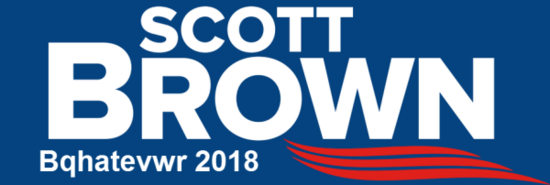
Bqhatevwr

The year in language began with former Senator Scott Brown’s Twitter trouble when he responded, a bit hastily, to a troller, “Bqhatevwr,” leading to, as Daily Kos put it, “mass hilarity.”

Gun control debate

The linguistics of gun control — or should that be gun safety? — featured prominently in language news this year. NPR discussed how language shapes the debate and how deeply embedded gun metaphors are in the English language.

Boston Marathon bombings

In the aftermath of the pressure cooker bombings, Ben Zimmer addressed how the word surreal was used over and over to describe the events. At Lingua Franca, Lucy Ferriss discussed the term first responder, and Jen Doll looked at how we use terms like bro bombers to “pop the balloon of terror.”

Passings

We were saddened by several passings this year, including programmer and activist Aaron Swartz; screenwriter Ruth Prawer Jhabvala; film critic Roger Ebert; journalist Michael Hastings; science fiction writer Richard Matheson; TV writer Gary David Goldberg; long-time White House correspondent Helen Thomas; crime fiction master Elmore Leonard; poet Seamus Heaney; best-selling author Tom Clancy; Cuban-American novelist Oscar Hijuelos; Nobel Prize winner Doris Lessing; Young Adult author Ned Vizzini; and Michael Cronan, graphic designer, marketing executive, professional namer, and Reverb friend.

More notable passings of 2013.

Argle-bargle and Antonin Scalia

In June the Supreme Court struck down a key part of the Defense of Marriage Art, “the 1996 law signed by President Clinton that defined marriage as between a man and a woman for the purpose of federal law.”

A dissenting voice was Justice Antonin Scalia, who described “the reasoning of the majority opinion” as “legalistic argle-bargle.” Argle-bargle, says Ben Zimmer,  is “a verbal dispute.” Arika Okrent looked at argle-bargle and the meaning of word reduplications while Slate offered a glossary of Scalia-isms.

Later, Scalia went on to say that “words have meaning [and] their meaning doesn’t change.” We hate to break it to you, Nino, but —

Changing definitions

The changing definitions of words was also a big story in 2013. In February, the Associated Press addressed same-sex unions by changing their definition of the the word marriage:

Regardless of sexual orientation, husband or wife is acceptable in all references to individuals in any legally recognized marriage. Spouse or partner may be used if requested.

Jen Doll told us what the definition of marriage tells us about marriage equality. Meanwhile, the definition of fiance might be changing as well.

The gender neutral pronoun

What if the subject could be either a he or she? What if you don’t know? What if it doesn’t matter? You could use the singular they (Jen Doll is against it, John E. McIntyre is for it, and OxfordWords blog remains neutral). You could make up your own pronouns like kids in Baltimore and elsewhere.

Or you could omit pronouns all together, like The New York Times in this tweet about Bradley Manning, sentenced for leaking classified documents to Wikileaks, who released a statement saying, “I am Chelsea Manning. I am female.” Or you could ignore the individual’s wishes, like The New York Times again when they referred to Private Manning as “he” in an article about her announcement.

‘Literally’ in the dictionary!

Some people freaked out about the “wrong” definition of the word literally going in “the dictionary” (which dictionary, they didn’t say). However, as Ben Zimmer pointed out, this “incorrect” meaning — literally used to mean figuratively — has been in use since 1769.

So take some advice from John McIntyre, Ben Yagoda, and Tom Chivers, and literally calm down.

Cracker and the n-word

Controversy ensued when celebrity chef Paula Deen admitted to having used the n-word in the past. Kathleen Parker at The Washington Post explained why Trayvon Martin’s use of cracker to describe George Zimmerman doesn’t compare to using the n-word, while NPR recounted the secret history of the word cracker.

JK Rowling unmasked

The Harry Potter creator was revealed to be the author of the crime novel, The Cuckoo’s Calling, which she had written under the pseudonym, Robert Galbraith. While forensic linguist Patrick Joula figured this out by using “a computer program to analyze and compare word usage,” Vulture gathered their own Potter-esque clues in the crime novel.

Alice Munro wins Nobel Prize

Short story writer Alice Munro was awarded the Nobel Prize in Literature, becoming the first Canadian woman to do so and prompting accolades from fellow authors.

Except, that is, for American Psycho author Bret Easton Ellis who tweeted that Munro was “an overrated writer,” prompting comedian (and Canadian) Norm MacDonald to eviscerate Ellis in a few tweets.

Jane Austen madness

With the 200th anniversary of the publication of Pride and Prejudice, 2013 was a big Jane Austen year. The Royal Mail released stamps featuring scenes from all six of Austen’s novels; a giant Mr. Darcy was erected in Hyde Park, London; Austen’s likeness is set to replace Darwin’s on the 10 pound note; and an Austen portrait was recently sold at Sotheby’s for £164,500.

The biggest Austenites may want to go this Jane Austen summer camp or the annual meeting of Jane Austen Society of North America, or JASNA for those in the know.

Great Gatsby mania

Baz Luhrmann’s The Great Gatsby came out, and everyone went nuts for everything Gatsby, from book covers, to the language of jazz, to F. Scott Fitzgerald’s contributions to the English language. We at Wordnik were not immune and wrote about the language of the 1920s beyond the bee’s knees.

Choosy pronouncers choose GIF

We’ve been pronouncing it wrong all this time! At least according to Steve Wilhite, the creator of the Graphics Interchange Format, better known as the GIF. However, Stan Carey assured us we can pronounce GIF any way we want, even if Alex Trebek pronounces it like the peanut butter.

The new ‘the’

Australian restaurateur Paul Mathis proposed a new symbol to replace the cumbersome three-letter word. Arit John questioned if we really need to shorten the while Tom Chivers recounted other failed attempts at “improving” the English language.

Linguistic tropes

All types of linguistic tropes were the rage this year. Anne Curzan revealed that the slash isn’t just a punctuation mark anymore, and Stan Carey told us about the new preposition because (because language slash awesome!).

Ben Yagoda considered what he considers the most. Tiresome. Trope. Ever. Ben Crair at New Republic claimed the period to be the most pissed off of all punctuation marks. Anne Cuzan also wrote about all caps while James Harbeck gave us some pointers on how to use them correctly.

Cronuts and other food mashups

It’s part croissant, part donut, all portmanteau — what’s not to love about the cronut? But 2013’s food mashups didn’t stop there. There was the frissant, part fritter, part croissant; the Thanksgiving turdoughnut, a donut stuffed with turkey and cranberry sauce or gravy; the s’monut, a s’mores donut; and many more.

For even more on food mashups, check out this Reverb collection.

The selfie

First there was the selfie, then the funeral selfie, then a presidential funeral selfie (oh, Barry), the shelfie (our personal favorite), and the felfie. No wonder Oxford Dictionaries picked selfie as their word of the year.

[Image via Daily Kos and @tmwsiy]

Our Most Popular Posts of 2013

We had lot of of fun this year writing about words and language. We wrote about thief words and sailor sayings. We discussed coupon lingo, weird taxes, and hacker slang. We examined words coined in the 1920s beyond the bees’ knees. We confessed to liking big back-formations and hit the shizzle with some Snoop Dog Lion inspired -izzle words.

Today we’re bringing you our 10 most popular posts of the year. Enjoy!

10. A Brief History of Yippee-Ki-Yay

July saw the 25th anniversary of the opening of Die Hard, and of course we had to delve into the etymology of that famous phrase. Or at least the first half (Slate took care of the second).

9. Eight Surprising Words from Portuguese

Tempura, who knew?

8. Cullions, Fustilarians, and Pizzles: A Short Dictionary of Shakespearean Insults

What better way to insult than to insult like the Bard?

7. Lewis Carroll: Through the Looking-Glass, and What Words We Found There

It’s fitting that the king of the portmanteau invented the word portmanteau, as well as chortle, mimsy, and snark.

6. Mad Men Soup: 15 Groovy Words From Season 6

After a long wait, Mad Men finally returned to TV this year, and we learned about the origins of words like catsup, grok, and the elusive Yankee wrinkle.

5. A Brief History of Newspaper Lingo

Ever wonder where yellow journalism, lede, and tabloid come from? We found out in this historical look at newspaper terminology and slang.

4. Dickensian Soup: 11 Words from Charles Dickens

Among the surprises were that Dickens coined the modern-sounding the creeps, and the possible connection between the Firefly expletive, gorram, and Dickens’s gorm, a corruption of goddamn.

3. Have an A1 day!: Our Favorite Words from Breaking Bad

While the first half of the season was rife with thief, drug, and fast food terminology, this final half season of one our favorite shows was all about euphemisms, from change in management, to rat patrol, to sending someone to Belize.

2.  Downton Soup: The Words of Downton Abbey, Season 3

We’re not sure what we love more about the show: the drama and romance, or the British idioms, anachronisms or not.

1. Spelling Confessions: Words We Still Can’t Spell

We Reverbers, along with some kind followers on Twitter, admitted to still not being able to spell seemingly simple words such as restaurant, surprise, and weather. Perhaps we’re not alone in this as this was our most popular post of 2013.

We’re looking forward to 2014! What would you like to see us write about in the new year?

[Photo: CC BY 2.0 by Mary-Frances Main]

Language Blog Roundup: WOTY news, ’tis, shelfies

Welcome to this week’s Language Blog Roundup, in which we bring you the highlights from our favorite language blogs and the latest in word news and culture.

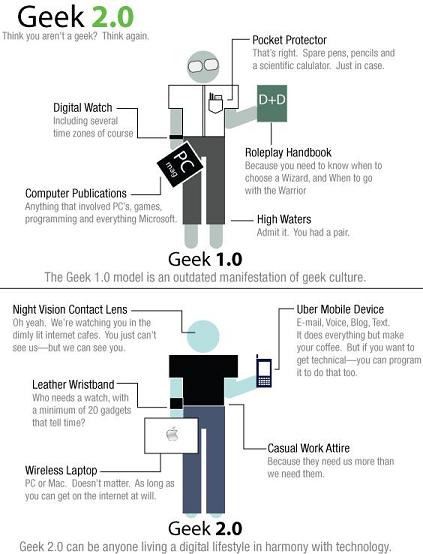
In word of the year news, Dictionary.com’s selection for 2013 is privacy; Geoff Nunberg, like Oxford Dictionaries, is going with selfie; and Collins Dictionary has chosen geek. Curious about the origin of geek, dork, and other nerdy words? Check out this post from io9.

Meanwhile twerk is the word TIME readers most want banished from the English language, and bitcoin is the Australian National Dictionary Centre’s wordy pick of the year. And where there’s bitcoin, there are bitcoinaires, as spotted and explained by Barry Popik.

In other language news, in Norway all library books must be digitized by law; a Jane Austen portrait sold for almost 165,000 pounds; and New York Times book reviewer, Michiko Kakutani offered her 10 favorite books of the year.

This week we learned the origin of the word hipster; how to tell statements from questions in Valley Girl talk; and what the heck “the Desolation of Smaug” means. At The Atlantic Megan Garber wondered if delightful is the new cool, Deborah Fallows taught us the language of the skies, and, as reported by the CBC, we discovered that the L’Académie française decided that sexting in French is not sextos but textopornographie.

Ben Zimmer traced the history of the phrase embrace the suck, recently uttered by Nancy Pelosi. Arika Okrent gave us eight beautiful snow scenes from literature and 11 proclitic words such as ‘tis, ‘twas, and ‘twere. Grammar Girl explained why we call people redheads and not orangeheads.

From the OUP blog  is a post on the different shades of gray and grey, and from OxfordWords Blog, the lasting impression of fictional titles. From Barry Popik we got the story behind the phrase Wolf of Wall Street.

In words of the week, Fritinancy selected scrumpy, “rough cider made from dried or withered apples,” and affluenza, “a painful, contagious, socially transmitted condition of overload, debt, anxiety and waste resulting from the dogged pursuit of more.”

The Word Spy spotted attention theft, “the intrusion on a person’s attention by unwanted and unauthorized text, sounds, or images”; participatory Panopticon, “an all-encompassing system of surveillance created by the people being watched through their use of mobile technologies and trackable transactions”; and gift creep, “a gradual increase in the value or extent of one‘s gift-giving.”

The Dialect Blog looked at the changing meaning of nauseous; the “sickness” accent; and young New Zealand English.

Peter Leonard wrote a tender obituary for his father, Elmore. The New Yorker told us about David Foster Wallace’s favorite grammarian and recapped this year’s literary feuds. Maria Popova told us about authors’ sleeping habits versus their literary productivity.

This week we also learned about the origins of the word sheeple and how to talk like a real-life line cook. We loved this round-up of (some NSFW) band names, these Japanese love hotel names that could be band names, and these 20 famous authors as dolls (Ernest Hemingway action figure? yes please!).

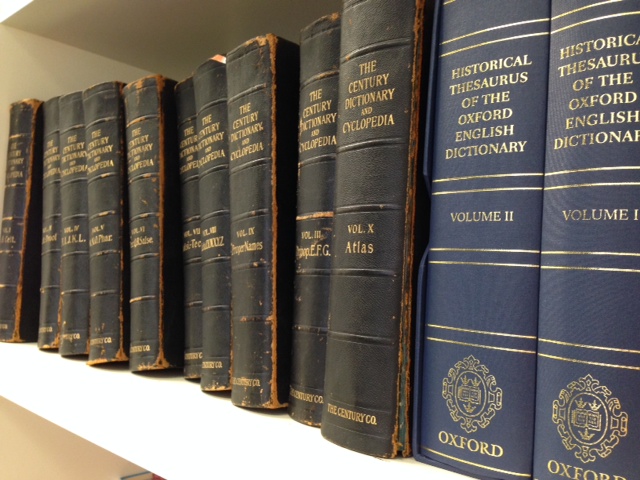
Tired of selfies? You’re in luck: now there’s the shelfie.

Wordnik shelfie

Don’t feel like working? You’re in luck again. Check out this OED birthday word generator and find out which words originated the year of your birth.

That’s it for this week! Until next time, happy holidays!

(Photo: CC BY 2.0 by LuChOeDu]

8 Words from Mark Twain

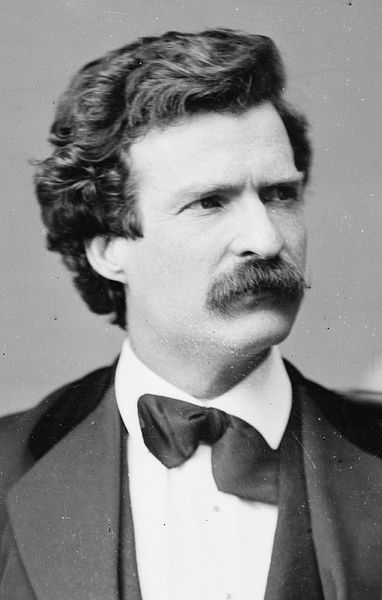
On this day in 1884, Adventures of Huckleberry Finn was published for the first time. In celebration we’ve rounded up eight words coined or popularized by the novel’s author, a guy you might know as Mark Twain.

bicentennial

“New Orleans intended to fittingly celebrate, this present year, the bicentennial anniversary of this illustrious event; but when the time came, all her energies and surplus money were required in other directions, for the flood was upon the land then, making havoc and devastation everywhere.”

Life on the Mississippi, 1883

Usage of the word bicentennial, meaning occurring every two hundred years, has been steadily increasing since the 1880s. The usage rose sharply in the 1970s, probably due to the United State Bicentennial, and then again in the mid-1980s, perhaps due to the bicentennial of the Statue of Liberty.

blip

“We took him a blip in the back and knocked him off.”

St. Nicholas, 1894

Twain’s usage of blip here means “any sudden brisk blow or twitch; a quick popping sound,” according to the Oxford English Dictionary (OED), and is probably imitative in origin. The word came to refer to “a spot of light on a radar or sonar screen” around 1945, and the figurative meaning of “a temporary or insignificant phenomenon” in the mid-1960s.

A brontosaurus on a 1962 panorama of the Front Range Foothills

brontosaurian

“Two of these cults are known as the Shakespearites and the Baconians, and I am the other one—the Brontosaurian.”

Is Shakespeare Dead? 1909

Brontosaurian here means “of or pertaining to a brontosaurus,” says the OED, and therefore figuratively, “antiquated; clumsy, ineffectual.”

The word gained peak usage in the 1920s, about 10 years after Twain’s, before dropping off and gaining some up-and-down frequency from the 1940s through the 1980s before dropping off again.

bug

“Well, sir, his dead-lights were bugged out like tompions; and his mouth stood that wide open that you could have laid a ham in it without him noticing it.”

Rambling Idle Excursion, 1877

Bug here meaning “to protrude” might be an alteration of bulge, although one could imagine it meaning having eyes resembling that of a bug.

cocoon

“We snatched on a few odds and ends of clothing, cocooned ourselves in the proper red blankets, and plunged along the halls and out into the whistling wind bareheaded.”

A Tramp Abroad, 1880

Twain’s use of cocoon as to mean to wrap in something resembling a cocoon is the earliest recorded. The word cocoon ultimately comes from the Greek kokkos, “seed, berry.” Cocoon also has a newer meaning of “to stay inside and be inactive.”

lunkhead

“So the duke said these Arkansaw lunkheads couldn’t come up to Shakespeare; what they wanted was low comedy—and maybe something ruther worse than low comedy, he reckoned.”

Adventures of Huckleberry Finn, 1884

A lunkhead is slang for a stupid person or blockhead. This word may be an alteration of lumphead. The usage of lunkhead far surpasses that of lumphead.

slim jim

“Got it, slim Jim!”

A Connecticut Yankee in King Arthur’s Court, 1889

A slim Jim here refers to “a very slim or thin person,” and also means anything long, thin, or narrow, such as slim-jim pants or a slim-jim tie. In 1902, says the Online Etymology Dictionary, slim jim referred to a type of “slender cigar,” and in 1975 to the meat snack.

slumgullion

“We could not eat the bread or the meat, nor drink the ‘slumgullion.’”

Roughing It, 1872

The slumgullion Twain is referring to “a cheap drink.” It also means “a watery meat stew” and “offal or refuse of fish of any kind; also, the watery refuse, mixed with blood and oil, which drains from blubber.”

The word may come from slum meaning “in metallurgy, [the] same as slime,” and the dialectal gullion, “mud,” which may come from the Irish Gaelic goilín, “pit.”

[Photo: “Brontosaurus,” CC BY 2.0 by Miranda Celeste Hale]

Language Blog Roundup: Nelson Mandela, all caps, dalek

Welcome to this week’s Language Blog Roundup, in which we bring you the highlights from our favorite language blogs and the latest in word news and culture.

We were saddened by the passing of Nelson Mandela. Mandela was a leader in the anti-apartheid movement and served 27 years in prison for “sabotage and conspiracy to overthrow the government.” Upon his release he sought to abolish apartheid, becoming in 1994 South Africa’s first black president. Mandela was 95.

In language news, we learned about millions of people in China who resist speaking Mandarin, preferring their native dialects. U.S. military slang expanded dramatically during the Iraq and Afghanistan wars, and Code Switch at NPR told us why Chaucer said ax instead of ask, and why some still do.

Teddy Wayne at The New York Times considered the death of the catchphrase. Mark Bowden at The Atlantic praised fancy words and BBC News wants to bring back some fun old words. Meanwhile, Android has a bizarre list of banned words.

In case you didn’t know, it’s almost Christmas, and Arika Okrent rounded up six grammar points to watch out for Christmas songs. Don’t know what to get the bibliophile in your life? Get some ideas from this roundup of Best Books articles from Reverb. Still confused? Try NPR’s Book Concierge, an interactive guide to 2013’s best reads.

Did you know the period is pissed? Yes. It. Is. And using all caps isn’t just about yelling anymore, according to Anne Curzan at Lingua Franca, ALTHOUGH IT SEEMS LIKE IT, DOESN’T IT? At The Week, James Harbeck offered a guide on how to use all caps in a useful and not annoying way.

James also gave us a simple way to remember how to use you and I versus you and me. Constance Hale taught us the difference between careen, career, and carom.

OxfordWords blog listed eight words we need to know for The Hunger Games. Ben Zimmer celebrated the Doctor Who 50th anniversary with the story behind the word dalek.

io9 recounted the experiment that led to the concept of thinking outside of the box. Mental Floss listed 12 words that originated in the funny pages. Barry Popik traced the history of the word gastrocrat, an influential person in the food world, and the chilly phrase colder than a witch’s tit.

Robert Lane Greene discussed the decrease in formality in western languages. Arika Okrent rounded up 15 words etymologically inspired by animals and told us how long crazy German words come to be.

At Lingua Franca, Geoffrey Pullum looked at whether and when, and Anne Curzan considered the freshperson problem. At Macmillan Dictionary blog, Michael Rundell discussed the language of conspiracy and Stan Carey peered into the grumbling heart of the curmudgeon.

On his own blog, Stan examined the colloquial use in Ireland of the word cat to mean “awful, unpleasant, rough, terrible, bad, calamitous, or very disappointing.”

Word Spy spotted street as a verb meaning “to release a dangerous or helpless mentally ill person from a hospital because there are no private or public psychiatric beds available,” and perching, “while in a car in a crowded parking lot, waiting for, and possibly following, a person who is going to exit the lot and thus free up a parking spot.”

Fritinancy’s words of the week included geofencing, “a technology that defines a virtual boundary around a real-world geographical area,” and bitcoin, “a decentralized, open-source, peer-to-peer virtual currency.” Fritinancy also took a look at the annual overuse of ‘tis the season, and a lulu of a naming trend.

In other naming news, the Boston Globe discussed the connection between popular dogs’ names, pop culture, and owners’ tastes. Meanwhile, TV nerds are naming their babies after characters from Breaking Bad and Homeland.

This week we learned about the slang of hobos, English con men, Parisian prostitutes, and German bandits. We loved these beautiful bookshelves of questionable functionality and these posters that turn authors’ words into art. We’ll try to remember these life lessons from Joan Didion, whose birthday it was yesterday.

That’s it for this week!

[Photo via Wikipedia, by Paul Weinberg]

Language Blog Roundup: Doris Lessing, selfie, because

We were saddened by the passing of Doris Lessing. Don’t miss Margaret Atwood’s moving homage to the Nobel prize-winning author.

It’s closing in on the end of the year, which means it’s word of the year time. The Oxford English Dictionary’s selection was selfie. However, Katherine Connor Martin at OUPBlog wasn’t satisfied with just one WOTY and selected 12, one for each month — with graphs!

In other language news, a judge ruled in favor of Google, agreeing “that its scanning of more than 20 million books for an electronic database, and making ‘snippets’ of text available for online searches, constituted fair use.” Publishers Weekly banned a few uniquely compelling and poignant words. The NPR Code Switch blog discussed the origins of the term hoodlum.

Hunger Games fans! Catching Fire is out today, and Slate has a textual analysis and comparison of Hunger Games, Twilight, and the Harry Potter series.

This week we learned how to speak Death Metal English, how we’ll swear in the future, and about 12 mistakes almost everyone makes when writing about grammar mistakes.

We also found out about a universally understood syllable (huh? you heard us). Meanwhile, James Harbeck explained why pain is expressed differently in different languages.

Robert Lane Greene explored the impossibility of being literal and assured us that technology changing language is okay and that “only dead languages never change.”

Ben Zimmer discussed grand bargains, Goldilocks as metaphor, and adjective-ass construction. Arika Okrent told us why defining the is so difficult, and gave us 11 teeny units of measurement, three reasons for syllabically ambiguous words, and 26 of Noah Webster’s spellings that didn’t catch on.

At Language Log, Victor Mair offered some Pekingnese put-downs and Mark Liberman took on Okie uptalk. At Macmillan Dictionary blog, Liz Potter related the story behind the phrase Bob’s your uncle, and Stan Carey wondered if banning slang was counterproductive.

On his own blog, Stan gave us some hair-raising etymology and took a look at because as a preposition (because grammar), which inspired Megan Garber at The Atlantic to take a further look (because awesome).

Fritinancy’s words of the week were petrel, “the English translation of the Chinese word Haiyan, which is the international name of the ‘supertyphoon‘ that has ravaged large areas of the Philippines in recent days,” and Friendsgiving, “a Thanksgiving meal shared with friends rather than family.”

Word Spy spotted pistachio principle, “the tendency to eat less food given certain visual cues, particularly evidence of the amount of food consumed, such as pistachio shells”; vanity height, “unusable space at the top of a tall building created by a spire or similar extension added only to give the building extra height”; and kid credentialing, “having a child participate in activities, programs, and experiences that will look good on the child’s future college application.”

Billy Baker at The Boston Globe compared the accents of Boston mayors, old and new. The Dialect Blog examined Americans imitating Canadians.

Mental Floss gave us haters and lovers, and old-timey sexting acronyms. The Modern Farmer explained why being the black sheep is a bad thing and other ag-idioms. Pacific Standard offered a peek inside the world of competitive laughing, where laughaletes compete in categories such as Diabolical Laugh, the snort laugh, and the Alabama Knee-Slapper.

We agree these 10 terms will help us appreciate fantasy literature, were surprised cheese lexicon could be headache-inducing, and wondered if these new terms for female body parts were necessary.

We love this map showing San Francisco’s literary history and this one that reveals who is saying the F-bomb where. We adore all of these pop culture librarians, but Giles will always be our favorite.

That’s it for this week! Until next time, happy Friendsgiving!

[Photo via NPR]