weblog

February 10, 2012

This Week’s Language Blog Roundup

Welcome to this week’s Language Blog Roundup, in which we bring you the highlights from our favorite language blogs and the latest in word news and culture.

Erin McKean started off the week with a look at how the Super Bowl got its name. For Fashion Week, Erin spoke with The Fashion Spot about fashion jargon, and appeared on The Today Show to talk about the language around men’s grooming and fashion (“There’s meggings, which are leggings for men, kind of ill-advised”). Meanwhile, Mark Peters at the OUP Blog explored denim word blends.

This week also marked the 200th birthday of Charles Dickens. Ben Zimmer wrote about how Dickens helped shape the English lexicon; Jonathan Green discussed Dickens and slang; Letters of Note gave us a few lovely letters from the prolific author; and Time Out New York listed eight Dickensian things you might not know.

In politics, John McWhorter spoke with NPR about why bilingualism is considered a political liability, and Johnson examined the claim that President Obama’s State of the Union address was too simplistic.

At Language Log, Geoff Pullum discussed some faulty noun choices while Mark Liberman assessed the state of the phrase each other. Victor Mair examined the effect of the retroflex final -r on allegro, or abbreviated, Mandarin; the annals of Chinglish in airports; mistaken mango (or is it bango?); and a dog of a insult.

Ben Zimmer explored the Boston accent, while Dialect Blog considered the Canadian accent, constructed dialects, and nasal vowels. Meanwhile, the Texas twang may be disappearing. In British versus American English, Lynneguist parsed the AmE and BrE differences of the word graft while BBC listed five American expressions the British don’t understand (in that case, bite me).

At Macmillan Dictionary Blog, Orin Hargraves and Stan Carey had some fun with new words, while Michael Rundell explained how words get into the dictionary. On his own blog, Mr. Carey told us about another nuance of the word till and that we might could dig some multiple modals. Kory Stamper deliberated on irregardless and the gray areas of English, while Jan Freeman considered bring versus take.

Fritinancy posted about some slutty – in a good way – brand names, and in words of the week, cited skijoring, “cross-country skiing with the assistance of dogs,” and bear claw, “a large sweet pastry shaped like a bear’s paw.” Erin McKean noticed Xoloitzcuintli, the national dog of Mexico; flexitarians, vegetarians who sometimes eat meat; kaiseki, an exquisite multi-course Japanese meal; and socialbots, “sophisticated Twitter bots.”

The Word Spy spotted bashtag, “the use of a corporation’s Twitter hashtag to bash the company’s products”; cyberflaneur, “a person who surfs the web with no purpose beyond curiosity and inquisitiveness”; and slacklining, “a sport that involves walking or balancing on a slack nylon webbing suspended between two points,” as demonstrated by “that guy in a toga bouncing crazily on a rope next to Madonna” during Sunday’s Super Bowl halftime show.

The Virtual Linguist discussed bus drivers banned from calling passengers “babe”; the origins of the word hoopla; and the differences between ought, nought, and aught. Arnold Zwicky piled on some noun pile examples, while Arrant Pedantry considered comprised of fail. Seqsuiotica explored the word sketchy; some noisome usage; and a wordy realm. Lists of Note listed nonsense words from Roald Dahl, names for a new car from poet Marianne Moore (Ford went with their own idea, Edsel), and Thomas Edison’s possible names for the phonograph (we’re partial to glottophone).

We learned about pearl clutching; the misuse of literally; and the stories behind publishers’ animal logos. We found out why words with multiple meanings make language more efficient, and that African language clicks are also common in English. We agreed with Forbes that business jargon is pretty annoying, learned a thing or two about drug slang, and are trying to work NSA lingo into our everyday conversation (“Hey desk rats, no slipping and sliding!”).

We thought we might be suffering from Hogwarts headache; have experienced a few of these laws named for writers (our favorite: “Any sufficiently advanced technology is indistinguishable from magic”); and hoped that Etymology-Man would come to our rescue if we ever ran into word trouble. Finally, we wanted to book an around-the-world flight to visit these incredible bookstores, and agree there are some things Calvin and Hobbes have said better than anyone.

That’s it for this week!

Comments (0)

January 27, 2012

This Week’s Language Blog Roundup

Welcome to this week’s Language Blog Roundup, in which we bring you the highlights from our favorite language blogs and the latest in word news and culture.

Earlier this week was Burns Night, and while we celebrated Scottish poet Robert Burns with some Scottish food words, BBC gave us some Scottish food recipes (haggis, anyone?). This week was also the Lunar New Year, which The Atlantic rang in with some gorgeous pictures, while at Language Log, Victor Mair wrote about the year of the dragon.

Mr. Mair also discussed pinyin faux amis and Google translate and Chinese. Mark Liberman explored Finnish language flowers (crash blossoms in English), snowmanteaux, the word quite, and the phrase only and only if. Geoffrey Pullum pointed out an Australian company’s right to use another phrase, nuckin futs, and was puzzled in Tarrgona about elevators and baffled in Barcelona about an airport sign. Mr. Pullum also advised politicians not to borrow from Hollywood (at least not without proper citation) when making speeches.

Mr. Liberman bemoaned the loss of the apostrophe from Waterstones, while Mr. Pullum gave his two cents and wondered if the apostrophe ever represents a sound. Stan Carey considered apostrophe apostasy and rounded up apostrophic reactions from around the web. Mr. Carey also explored new abbreviations, as did Ben Yagoda at Lingua Franca (and don’t forget Erin McKean’s piece on clipped words from October).

Macmillan Dictionary blog offered a great primer on American political discourse, while Johnson pondered mixing languages, losing certain types of British accents, and the word issue. Ben Zimmer discussed American dialects from A to Z, while at Lingua Franca, Geoff Pullum wrote about the singular they and what’s normal and what’s formal; Lucy Ferris commented on comments; and Ben Yagoda read the newspaper with a grammar geek’s eye.

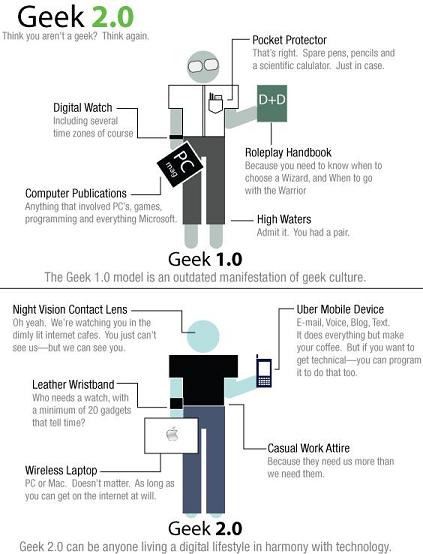
Kory Stamper discussed defining obscenities, and editorial correspondence and the dictionary. Arnold Zwicky considered the word fanny, “an area ripe for trans-Atlantic misunderstanding and offense,” and the geek voice. Sesquiotica examined spoffle (as coined by actor Hugh Laurie); scattermalia, “little details passed back and forth one at a time until you lose track entirely of who said what when in response to what”; and the elusive geoduck (which by the way is not an earth duck).

The Virtual Linguist took a look at masher, “well-to-do young men who came [to the music-hall] mainly to look at the women”; women’s use of vastly and other adverbs; and the dwindling use of barrow boy stock market slang. The Word Spy spotted black-hole resort, “a resort that blocks all incoming and outgoing Internet signals”; workshifting, “using portable devices and wireless technologies to perform work wherever and whenever it is convenient”; and Eurogeddon, “an extreme European economic, political, or military crisis.”

In the week in words, Erin McKean noticed Chollima, a rather frightening North Korean version of Pegasus; neophiliac, those “who chase the new at all costs”; mouse type, “6- or 7-point type” largely used for “warnings, disclaimers and legal jargon”; and weibo, “Twitter-like microblogs” in China (“Because weibo sounds like the Mandarin word for ‘scarf,’ microblogging in China is sometimes referred to as zhi weibo, or ‘knitting a scarf’”).

Erin also collected some new words from noncelebrity neologizers, such as nukepicking, “the combination of nitpicking and blowing things out of proportion”; estiknow, “to assert that you’re 90 percent sure of something”; and technoschmerz, “the emotional pain (schmerz comes from a German word meaning ‘pain’) caused by difficult interactions with electronic gadgets or unhelpful websites.”

Fritinancy’s word of the week was grandiosity, “greatness of scope or intent; feigned or affective grandeur or pomposity; excessive use of verbal ornamentation.” Fritinancy also examined incorrect usage of the word infamous, and the anachronistic usage of the phrase to contact in period drama Downton Abbey. Dialect Blog delved into Downton Abbey’s accents, and the supposed decline of the New York accent. Editor Mark offered an updated archive of very helpful tweeted tips; Lists of Note listed William Safire’s Fumblerules of Grammar; and Mental Floss gave us Ben Franklin’s 200 synonyms for drunk.

We learned that a town in Western France has banned the word mademoiselle, arguing that “women, like men, should not be defined by their marital status”; some teen slang from British TV; the 20 biggest differences between British and American English; the unexpected inspirations behind some children’s books; and the origin of the snark.

We loved this letterheady website and the new look this artist is giving the print dictionary. We were amused by the idea of rabbles at underground Scrabble meetings, and would very much like to read this book, “a historical and cultural study of fiction fandom.”

Finally, we thoroughly enjoyed this Maurice Sendak interview (otherwise known as “Shit Maurice Sendak Says”) with Stephen Colbert. Here’s part two.

That’s it for this week! We hope you Burns Supper suppers enjoyed your haggis, tatties, and neeps, and we wish everyone a lucky and prosperous year of the dragon.

Comments (0)

January 13, 2012

This Week’s Language Blog Roundup

Welcome to this week’s Language Blog Roundup, in which we bring you the highlights from our favorite language blogs and the latest in word news and culture.

Last week the American Dialect Society picked its 2011 word of the year, occupy, “verb, noun, and combining form referring to the Occupy protest movement.” Other categories included Most Useful (humblebrag, “expression of false humility”); Most Creative (Mellencamp, “a woman who has aged out of being a ‘cougar’ (after John Cougar Mellencamp)”); and Most Outrageous (assholocracy, “rule by obnoxious multi-millionaires”). Ben Zimmer, chair of the New Words Committee of the American Dialect Society, gives a recap at Visual Thesaurus.

The Economist discussed the gift of learning foreign languages, while Johnson discussed lexical accuracy in politics; the dreaded comma splice; fewer versus less; and Rick Santorum and the word santorum (NSFW), as coined by Dan Savage.

At Language Log, more Santorum shenanigans went on as Mark Liberman considered “blah” people. Mr. Liberman also examined political speech errors; “g-dropping” in songs and life; the origins of the phrase just sayin’; and the “floating discourse adjunct,” kind of thing. Victor Mair explored sauce in Texas and caravanserai on the Silk Road, and Mandarin Chinese in Mainland China versus Taiwan. Julie Sedivy wrote about the loss of speech, while Geoff Pullum discussed the passive voice and the stupidity of commenters.

In other political misspeaking, Jan Freeman posted about Ron Paul’s statement that he’s “nibbling,” as opposed to nipping, at  Mitt Romney’s heels. At Lingua Franca, Lucy Ferriss explored day and month words; Geoff Pullum revisited the singular they; Ben Yagoda peeved on a variety of topics; and Allan Metcalf asserted that efforts to revive and banish words make no difference (don’t tell that to British journalist John Tottenham – awesome!). At Macmillan Dictionary blog, Michael Rundell explained the difference between terminology and jargon, while Stan Carey got into inkhorn terms, and on his own blog engaged in some baby talk.

Fritinancy got hoity-toity and was all about the umlauts. Her word of the week was emoji, “Cartoonish icons used to communicate emotion in email and texting,” which is  “from the Japanese; a blend of ‘e’ (Japanese for ‘picture’) + ‘moji’ (‘letter’).” Word Spy spotted showroom, bustaurant, ineptocracy, and Janopause, “the practice of abstaining from alcohol for the month of January.”

Erin McKean rounded up the interesting words and linguistic trends of 2011, and noticed this week in words, like-jacking, moitié-moitié, resto-mod, and supremes. At The Boston Globe, Erin confronted the horror of ungrammatical song lyrics, and on the Colin McEnroe show talked dictionaries, print and otherwise.

Lynneguist explained the British English phrase just about, and the difference between the American English haste makes waste and the British English more haste, less spend. Kory Stamper described life as a lexicographer while Arnold Zwicky took a look at gastropubs and separated spellings. Sesquiotica considered triolets, ballades, and toques – or is it tuques? The Virtual Linguist told us it was Irish monks who first put spaces between words, and that “Germany has a problem with so-called ‘opium grandpas‘.”

Dialect Blog delved into t-tapping (“‘bitter’ sounds like ‘bidder’”); compared the New England and East Anglia accents; and wondered if there was ever a “veddy British” R. Grammarphobia explained where the word hobnob comes from; Motivated Grammar assured us hashtags aren’t ruining anything; and Grammar Girl told us the origins of the @ symbol and the word OK.

Meanwhile, The New York Times’ crossword puzzle editor Will Shortz was schooled on the true meaning of the word illin’; J. R. R. Tolkien’s chances at a Nobel were dashed by “poor prose”; and Mark Twain ranted about bad writing. We were excited to read this posthumous article from Christopher Hitchens, to celebrate the 50th anniversary of Madeleine L’Engle’s A Wrinkle in Time, and to imagine Daria, Rory Gilmore, and Rupert Giles as lit bloggers.

We learned that robots show randomness in language, that language is hardwired to be positive, and that there are some filthy words we still can’t say on TV. We found out which books were the most metal of 2011; that people crazy about Downton Abbey are probably crazy for books; why authors tweet; and why libraries have that smell.

We loved this dictionary of superstitions (“Finding a hairpin promises making a new friend; losing one is more ominous, suggesting that an enemy is close at hand”); this website that is attempting “to create a multi-layered ‘storyverse’ that links, cross-references and catalogues every mention of pretty much everything in fiction”; these 25 epithets from literature; and this Tokyo bookstore that personally recommends books to its customers. We also loved this Japanese store and its “fuckin’” sale (fuckin’ was a play on the Japanese word fukubukuro, meaning “lucky bags,”) and were saddened that they changed their sign.

Finally, thanks to Word Blog for including us in their 50 Best Blogs for Word Lovers.

That’s it for this week!


Comments (1)

December 30, 2011

This Week’s Language Blog Roundup

Welcome to this week’s Language Blog Roundup, in which we bring you the highlights from our favorite language blogs and the latest in word news and culture.

We start off with lots of word-of-the-year news. According to the Marist Poll, whatever is still the most annoying word; Lake Superior State University said these 12 words should be banned from the English language; and the U.S. News and World Report reminded us of 10 words we learned this year. Lynneguist cited kettling as the U.K. to U.S. word of the year, while in the opposite direction across the pond, it’s FTW, “for the win.”

At Johnson, Robert Lane Greene, while “not particularly a Word of the Year person,” still recommends “this fascinating discussion about wordness.” At the Philadelphia Inquirer, Amy Rosenberg rounded up the “non-occupy” words of the year while in his new column at the Boston Globe, Ben Zimmer talked about what words we talked about this year. At Macmillan Dictionary blog, Stan Carey gave his two cents about the words of the year, while Michael Rundell reviewed a year of language blogging.

In other word news, Lynneguist took a look at the difference between zee and zed. Fritinancy examined some bad names, some wrong names, and in words of the week, office plankton, “low-level office clerks; drones,” and anticipointment, which we hope you didn’t feel over the holidays. At the Boston Globe, Erin McKean discussed the suffix -mas (as in Christmas), and in words of the week, spotted Tebowing, lifestylization, workampers, and exoplanets. Word Spy caught arrival city, “a slum, shantytown, neighborhood, or other urban area that serves as an initial destination for a large population of rural migrants or foreign immigrants.”

At Language Log, Mark Liberman delved into hashtags, while Geoff Pullum considered the Scottish word, wee. Victor Mair was warned by some spotty translation about the green onion jaws of death and a meat patty that might explode the stomach, and was surprised by an English-only enclave in China. He also wondered if North Korean leader, Kim Jong Il, died or passed away while at the Visual Thesaurus, Ben Zimmer discussed the lexicon of dying.

The Virtual Linguist cooked someone’s goose, spoke loudly about the Lombard Reflex, and learned about homophenes, “words which look alike on the lips but have a different meaning, like mark, park and bark, or white, right and quite.” The Dialect Blog discussed the accent of contrarian Christopher Hitchens, who passed away earlier this month; the difference between Leeds and Manchester accents; pop versus soda; the Chicago accent; and drunken speech.

We wondered what if we occupied language. We learned about the literary history of word processing and a few tricks to win at Scrabble. We were glad to hear that Yiddish is making a comeback at colleges, and were amazed that this tiny Charlotte Bronte manuscript was sold to a Paris museum for £690,850. We enjoyed these beautiful libraries and bookstores from around the world, and loved these renditions of a grown up Calvin and Hobbes fighting an evil Winnie the Pooh (we never trusted that silly old bear). Finally, we were reminded that David Foster Wallace knew a lot more words than we do.

That’s it for this week! Here’s to a happy and healthy New Year.

Comments (0)

December 16, 2011

This Week’s Language Blog Roundup

Welcome to the Language Blog Roundup, in which we bring you highlights from our favorite language blogs and the latest in word news and culture.

What do you think the word of the year should be? At NPR, linguist Geoff Nunberg selected occupy:

It was a late entry, but since mid-September it has gone viral and global. Just scan the thousands of hashtags and Facebook pages that begin with the word: Occupy Wall Street, Occupy Slovakia. Occupy Saskatoon, Sesame Street, the Constitution. Occupy the hood.

Occupy was in the top slot of Time’s top 10 buzzwords of 2011, and made both Fritinancy’s words of the year roundup, which also included humble, personhood, and swagger, and Ben Zimmer’s (supercommittee, deather, and brony were a few others). Meanwhile, Forbes offered up the most overused business terms of 2011, and Allan Metcalf at Lingua Franca provided a helpful guide as to how the WOTY is chosen and an album of WOTYs in years past.

The Atlantic gave us a glossary to the U.S. debt crisis, and The Wall Street Journal’s Smart Money magazine launched their financial glossary (powered by Wordnik!).

Erin McKean revealed the secret behind brandworthy advertising and marketing terms; the perfect non-peeving gift; and the language of bros. Gawker declared chad the new bro; Fritinancy asked advertisers to stop ‘tis-ing her, bro; and PW told us where bros can go for books.

In words of the week, Erin spotted monozukuri, Japanese manufacturing skills; retail-tainment; and NoMad, “North of Madison Square Park” in New York City. Ben Zimmer examined apprenti, while Word Spy spotted couch commerce, “ordering goods and services while relaxing at home”; grey-sky thinking, “negative or pessimistic thoughts, ideas, or solutions”; hopium, a sort of irrational optimism; and fat finger problem, “the tendency to make errors on a device where the keys or screen elements are too small.”

Fritinancy noticed infidel, “an unbeliever with respect to a particular religion, especially Christianity or Islam,” and the Donner Party comma, “the comma of direct address,” which makes the difference between “Let’s eat, Grandma!” and “Let’s eat Grandma!” In other punctuation news, the Columbia Journalism Review considered the dash.

Johnson discussed the rudeness of automatic politeness; wondered what exactly is the Chinese language; and discovered the truth about mince pies. At Language Log, snowclones and eggcorns were hung by the chimney with care, with hopes that Newt Gingrich would not be there. Chinese and Pashtu nestled snug in their beds, while visions of Chinglish danced in their heads. Lie detection software made such a clatter, Mark Liberman detected something was the matter. Another Eskimo snow myth Geoff Pullum wanted to dash, along with the vocal fry hubbub (evinced by Kim Kardash). Overlap portmanteus, how fun, how merry. They are also known as sweet tooth fairies.

The Virtual Linguist pondered another kind of portmanteau, couple nicknames, as well as the etymology of the word panda and the term, zombie debtor. At Macmillan Dictionary blog, Michael Rundell perpended prepositions while Stan Carey examined eponyms. On his own blog, Mr. Carey discussed aposiopesis, “an abrupt breaking off of a thought, mid-sentence, often because of overwhelming emotion,” and the linguistics of LOLcat speak, as inspired by Superlinguo’s excellent presentation on the subject.

Sesquiotica also got catty – over the word cattery – and told us why it’s not the Silicon Valley. Jan Freeman raised an eyebrow at supposed “improvements” on Charlotte Bronte’s language (this lady would surely not approve). At Lingua Franca, Ben Yagoda noticed that everyone is starting their sentences with so, while Geoff Pullum coined misles, “private misanalyses of written forms that yield phonological errors if and when the word has to be spoken,” and wondered about the appropriate way to respond to academic hate mail.

Fritinancy reviewed rude wine brand names, while Dan Jurafsky discussed potato chips and “how the language of food advertising reflects socio-economic class.” Fully (sic) explored monolinguism in Australia and swearing on TV.  The Dialect Blog discussed dialects and register; th-fronting (“‘thing’ becomes ‘fing,’ ‘bother’ becomes ‘bovver,’ and ‘both’ becomes ‘bof’”); couple dialects; the Christmas dialect divide (is it merry or happy Christmas?); and the Cornish accent. Meanwhile at Entertainment Weekly, Meryl Streep talked about how easy accents are for her.

The New York Times made us want to read our books again and learn Dothraki and Klingon. We learned that in Russia, words come first, then deeds; why informers are called rats; ten words we didn’t know were onomatopoeias; and the mysterious origin of Auld Lang Syne. We found out that technology can both kill and save languages; babies understand grammar; and that JRR Tolkien, while a master storyteller, was an incredibly boring teacher.

We were excited to read an excerpt from Amy Tan’s short story, her first new fiction in six years, and to boldly go where no one has gone before with these first drafts of the Star Trek opening monologue. We wished for this awesome rules of magic chart in poster size, and added this Game of Thrones map to our holiday list, though these Ron Swanson cookies would do too.

Finally, we were saddened to learn of the passing of writer Christopher Hitchens, “the incomparable critic, masterful rhetorician, fiery wit, and fearless bon vivant.”

That’s it for this week. We wish you all happy and healthy holidays.

Comments (0)

December 2, 2011

This Week’s Language Blog Roundup

Welcome to the Language Blog Roundup, in which we bring you the highlights from our favorite language blogs and the latest in word news and culture.

At Language Log, there was much contention over Oxford English Dictionary’s word of the year, squeezed middle. Geoffrey Pullum thought the WOTY should be a word and not a phrase, while Ben Zimmer thought the WOTY need not be a word. Mark Liberman was also puzzled by the OED’s choice, but basically agreed with Mr. Zimmer, and also suggested a separate phrase of the year.

Eric Baković considered Michelle Bachmann’s lack of a gaffe and the importance of context; while Mr. Pullum took on the politics of prescriptivism, and Mr. Liberman talked peever politics. Meanwhile, Arnold Zwicky rounded up Language Log’s peever posts.

Over at the Boston Globe, Mark Peters wrote about why “personhood” is powerful; The New York Times discussed the lexicon of Occupy Wall Street; and BBC Magazine wondered about wealth words and who exactly count as “the rich.” The Macmillan Dictionary blog finished up Class English month with posts from Dan Clayton on the language of the “common people”; John Wells on the rise of the “r-ful” class; and a roundup from Laine Redpath Cole of words loaded with the most class content. At Johnson there were posts about legislative acronyms; that “vile Americanism,” the word likely; and untranslatability and forced distinctions.

In words of the week, Erin McKean spotted appumentary (“an app with the same sort of material you’d find in a documentary film”); BYOD (“bring your own device”); holothurian (another word for sea cucumber); and postprandial somnolence, “after dinner sleepiness.” Fritinancy noticed sharrow, “a road marking indicating that the road is to be shared by cars and bicycles”; caramel, of which there is disagreement about both etymology and pronunciation; and the loneliest wine in the world, which would actually go perfectly with this very lonely cookbook (but perhaps not this one of terrible banana recipes).

Stan Carey explored how the Klingon language was invented; hybrid etymology; and strange usage of the word too. The Virtual Linguist noted that Brits are saying thank you less (though are no less polite), and examined another word of the year. Sesquiotica explained haplology, “removing one of two sequential identical or similar sounds or syllables,” and celebrated his 1000th post with a discussion about milli. Superlinguo had a case of the hiccoughs but could still appreciate President Obama’s attempt at Australian lingo.

The Dialect Blog explored the changing dialect of hip-hop; the different meanings of geezer; noun phrases and stress; and how people think they make sounds. The Word Spy spotted drunkorexia, “eating less to offset the calories consumed while drinking alcohol”; diabulimia, “an eating disorder in which a diabetic person attempts to lose weight by regularly omitting insulin injections”; smartphoneography, “photography using a smartphone’s built-in camera”; and mailstrom, “an overwhelming amount of email; an email deluge.”

Smithsonian Magazine took a look at the science behind sarcasm, while the Richard Dawkins Foundation explored language and evolution. The Library as Incubator Project seeks to connect artists and libraries, while the British Library has made 300 years of newspaper archives available online. Meanwhile, X-Men writer Chris Claremont donated his archives to Columbia University’s Rare Book and Manuscript Library, and the library phantom of Edinburgh, Scotland has returned, leaving behind exquisite paper sculptures.

In author news, Wednesday marked Mark Twain’s 176th birthday. The Morgan Library celebrated with an online exhibition; Flavorwire reminded us of a lovely love note from Twain to his wife; and Mental Floss listed 10 quotes Twain didn’t really say. Google honored the author with a doodle depicting a scene from The Adventures of Tom Sawyer, while we offered a list that was more Huck Finnian.

We were excited to see Maragret Atwood’s own illustrations for her latest book, In Other Worlds: SF and the Human Imagination, as well as Madeleine L’Engle’s first story, written when she was 15 and included in the collection, First Words: Earliest Writing from Favorite Contemporary Authors. Slate gave us a brief history of invented languages in music, while The NY Times mused on traffic warnings in haiku. The Independent imagined food writing in different authors’ voices; McSweney’s translated one sentence into multiple literary genres; and BlogHer Offered these 17 gifts for grammar geeks.

Our favorite new website is That Is Priceless, which pairs classic art with hilarious captions. Meanwhile, our friends over at Bab.La are searching for the most beautiful English word. Help them out!

That’s it for this installment! Keep up with our blog by subscribing to the blog feed or follow us on Twitter.

Comments (0)

November 18, 2011

This Week’s Language Blog Roundup

Welcome to the Language Blog Roundup, in which we give you the highlights from our favorite language blogs and the latest in word news and culture.

In the world of politics, Rick Perry said “oops,” and Slate told us where oops comes from. Mark Liberman at Language Log took issue with Perry’s latest campaign ad and his lack of a verb, as well as speech-based lie detection “software” that supposedly proves Herman Cain is innocent of sexual harrassment. Meanwhile Robert Lane Greene at Johnson discussed Newt Gingrich and language, and Spanish in America.

In dictionary news, Ben Zimmer discussed the latest edition of the American Heritage dictionary, while the Scottish Language Dictionary charity is putting together the Concise Scots Dictionary. Erin McKean reviewed books that promise to help you talk better, and spotted in the Wall Street Journal week in words tobashi, solomo, and bronies, as well as Likeonomics, handwiches, and dead doubles.

At Language Log, Mark Liberman wrote about kids yesterday (and made us feel Principal Vernon old) and wondered if Lincoln could have furled his brow. Geoffrey Pullum objected to another’s objections about the passive voice, and kicked himself over tiramisu. Ben Zimmer considered Kate Bush’s 50 Words for Snow, while Mr. Pullum at Lingua Franca poked another hole in the many-Eskimo-words-for-snow argument.

Also at Lingua Franca, Ben Yagoda advocated going with the shorter word, and examined the overuse of right (I know, right?). Carol Saller wondered if all lawyers are not liars, while Allan Metcalf discussed the word guy.

At Macmillan Dictionary Blog, Ben Trawick-Smith considered the fall of the r-less class, while Stan Carey discussed Received Pronunciation and Dortspeak and questioned the “ideal” form of English. On his own blog, Mr. Carey let us know about the very cool Spaceage Portal of Sentence Discovery, “a database in which we the English-loving citizens of Internet can store countless examples of all the interesting language patterns and elements we are able to categorize.”

John McIntyre shook his head over usage literalists, while Motivated Grammar asserted that descriptivism doesn’t mean “anything goes.” Lynneguist gathered a month’s worth of American and British English untranslatables; and Johnson presented its results from its British and American English survey. The Virtual Linguist wrote about the experiences of Monica Baldwin, who spent 27 years in a closed convent and “could not understand much of the English being spoken around her when she finally rejoined the outside world”; brand names of Western products in China (“Hey, you dinged my Precious Horse!); and a study that showed that lower-pitched voices attract more votes.

Fritinancy’s words of the week were murmuration, a flock of starlings (her post includes a truly amazing video), and Semmelweis reflex, “the tendency to reject new evidence because it contradicts established norms or practices.” Fritinancy also wrote about tech jargon of yore, merry as a Starbucks verb, and this Mr. Tea set, which we have added to our Christmas list. In tooting our own horn news, Fritinancy gave a shout-out to our new series, Word Soup, in her November linkfest (thanks!).

Sequiotica posted about swizzle, umpteen, plouk, and mondegreens. Dialect Blog explored Multicultural London English; Chicano English; dialect work in the old days; and when Twitter words are spoken. The Word Spy spotted, among other words, war texting, “using text messages to break into a remote system such as an automobile or a GPS tracking device”; no planer, “a conspiracy theorist who believes that no planes were involved in the terrorist attacks of September 11, 2001”; and two-pizza team, “in a business environment, a team of employees that is not too large (and so can be fed with at most two pizzas).”

Speaking of food, we learned where the hot dog and hamburger got their names; all about It’s-It ice cream; and the history of macarons, macaroons, and macaroni. We were grateful for this list of non-errors, and chuckled over this punctuation cartoon from the Grammar Monkeys and this list of seven bar jokes involving grammar and punctuation. We pondered the language of the future, and what gets lost in translation. We learned that “only one veteran Navajo code talker remains of the original 29 Navajo Marines,” and that immigrant entrepreneurs often don’t need English to succeed. We wondered if comedy foreign accents are ever a good idea (depends on the accent).

We enjoyed these 20 Vonnegut-isms (well, except for the semi-colon remark), these 50 literary put-downs, and these six authors’ reading habits. We were delighted to learn that Neil Gaiman will be on The Simpsons this Sunday, and were a bit a creeped out by this Lego statue of Mark Twain. We were shocked to hear that Jane Austen might have been murdered, and were astounded that Salman Rushdie had to fight to use his own name on Facebook. We loved Salvador Dali’s 1969 drawings for Alice in Wonderland, as well as these vintage illustrations from Old French Fairy Tales.

Flavorwire gave us a brief history of time travel literature; this collection of rejected titles for classic books; and 10 famous literary characters and their real-life inspirations. They also offered 10 wonderful fake books by TV characters and a comprehensive rule book to pop culture’s fictional games (Calvinball, anyone?). Meanwhile, the PW blog told us about 6 fictional drugs with unintended consequences, Anglophenia offered up some money slang, and Time interviewed Michael Adams, the editor of Elvish to Klingon: Exploring Invented Languages.

Finally, our favorite Tumblr of the week was The Books They Gave Me, reflections on books given by lovers.

That’s it for this week! Check in the week after next for the next Language Blog Roundup installment, and don’t forget to catch our new series on Wednesday, Word Soup.

Comments (0)

Older Posts »
 

News: Google+’s Horowitz Talks About Joining Board of Wordnik, as Online Dictionary Site Garners $8M More in Funding (video)

News: Wordnik Launches First of Its Kind Word Graph

Read about us in Semantic Web!

We’re Hiring!
Head of Business Development

Subscribe to the blog feed

Follow Wordnik on Twitter

Become a fan on Facebook

See the word of the day

  • Recent Posts
  • Wordnik Word of the Day

  • Earlier Posts
  • Post Categories
  • Wordnik Search
    Get a random word